
Do you need help? Contact us:
30
Oct
Greenhouse White Coated Glass – Product Introduction
Greenhouse White coated glass is a functional specialty glass developed specifically for modern agricultural greenhouses and plant cultivation spaces. Relying on mature silk-screen printing technology, it uses high-temperature-resistant ceramic frit applied to the surface of tempered glass substrates to create customized light-transmitting, light-blocking, and light-diffusing patterns, which are then permanently fused through high-temperature sintering. The ceramic layer becomes integrated with the glass substrate, combining structural safety, optical adjustability, and weather resistance. It serves as a core enclosure material for precision light control, temperature regulation, yield improvement, and quality enhancement in modern smart greenhouses, and is widely used in vegetable cultivation, flower growing, seedling propagation, landscape greenhouses, research greenhouses, and other agricultural applications.
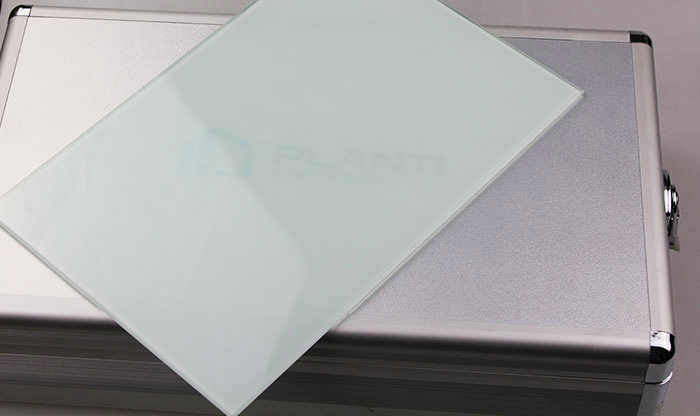
I. Manufacturing Process and Substrate Advantages
Greenhouse White coated glass is manufactured using high-quality float tempered glass as the base substrate. After precision cutting, edge grinding, and pre-tempering treatment, the glass passes through a professional silk-screen printing plate, where a customized agricultural-grade ceramic frit is evenly applied to the glass surface. It is then permanently fused at temperatures exceeding 700°C. This process allows the frit to deeply bond with the glass surface, completely eliminating the common problems of peeling, fading, and poor aging resistance found in ordinary printed glass.
The product is also compatible with secondary processing such as insulating glass units, laminated glass, and Low-E coatings, allowing additional functionalities including thermal insulation, soundproofing, shatter resistance, and anti-condensation to be integrated while preserving the silk-screen performance. This makes it adaptable to greenhouse environments across different regions and crop types. The finished glass has a strength more than five times that of ordinary glass, with excellent impact resistance and wind load resistance, fully meeting the structural safety standards required for long-term outdoor greenhouse use.
II. Core Features and Benefits
1. Precision Light Regulation for Optimal Plant Growth
This is the most essential function of White coated glass. Through customized dot, stripe, or gradient patterns, it enables precise adjustment of light transmittance and light diffusion. In summer, it effectively filters intense sunlight and UV rays, preventing leaf scorch and fruit sunburn. Meanwhile, it transforms direct sunlight into uniformly diffused light that spreads evenly throughout the greenhouse, eliminating shaded areas and ensuring both upper and lower plant layers receive adequate illumination. The light transmission parameters can also be customized according to crop characteristics, accommodating the light requirements of sun-loving, shade-tolerant, and light-sensitive plants, effectively improving photosynthetic efficiency and promoting uniform growth.
2. Thermal Insulation and Energy Efficiency
The silk-screen ceramic layer effectively blocks solar radiant heat, reducing heat buildup inside the greenhouse during summer and alleviating high-temperature stress. In winter, when combined with insulating glass units, it reduces indoor heat loss and narrows the day-night temperature differential. This maintains stable internal temperature and humidity conditions, significantly reducing the energy consumption of air conditioning, fans, and heating equipment, enabling energy-efficient cultivation and supporting year-round production.
3. Superior Weather Resistance and Long Service Life
The high-temperature sintered ceramic frit offers excellent resistance to UV radiation, aging, chemicals, and scratching. Even after prolonged exposure to outdoor sunlight, rain, and high-humidity greenhouse environments, it does not fade, delaminate, or peel. The glass substrate itself has strong corrosion resistance, adapted to the high humidity and fertilizer-mist conditions typical of greenhouses. Its smooth surface resists dust accumulation and is easy to clean, requiring minimal routine maintenance. The overall service life can reach 15 years or more.
4. Safety and Shatter Resistance for Agricultural Applications
The fully tempered substrate breaks into blunt, granular pieces rather than sharp shards, preventing injury to personnel and crops. Laminated glass options are available upon request, where broken glass fragments adhere to the interlayer without falling away, providing enhanced resistance to wind, snow, hail, and extreme weather conditions. This makes it particularly suitable for greenhouse construction in areas prone to high winds, heavy storms, and hail, ensuring greenhouse operational safety.
5. High Customizability and Practical Versatility
Patterns can be customized with different light transmittance levels, patterns, and dot densities based on greenhouse design requirements, crop types, and local light conditions. Size and thickness can also be tailored to individual specifications. The glass balances functionality with aesthetics—allowing light transmission while blocking direct glare—and enhances overall greenhouse cleanliness and visual appeal, making it suitable for commercial sightseeing greenhouses and research greenhouse applications.
III. Primary Application Scenarios
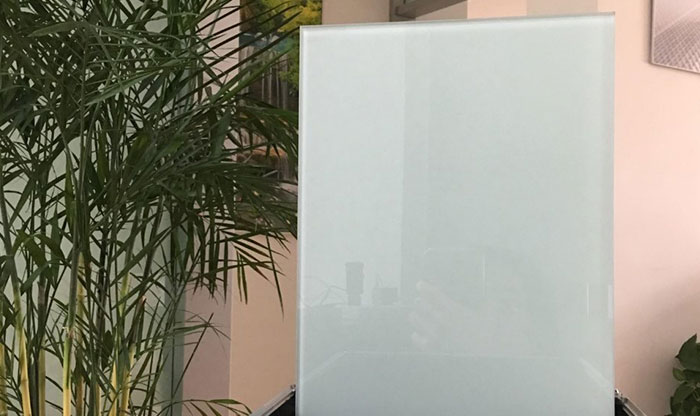
l Large-scale Commercial Growing Greenhouses: For vegetables, fruits, and flowers—solves issues of intense light damage and uneven illumination, improves crop yield and quality, and reduces deformed fruit and weak seedlings.
l Seedling and Tissue Culture Greenhouses: Young seedlings and tissue-cultured plantlets are light-sensitive; White coated glass softens light and stabilizes temperature and humidity, significantly improving survival rates.
l Research and Experimental Greenhouses: Provides precise light and temperature control, offering stable and standardized growing environments for plant breeding and growth experiments, ensuring accurate research data.
l Sightseeing and Landscape Greenhouses: Combines cultivation functionality with visual appeal, with soft and bright light that enhances the visitor experience—ideal for agritourism parks and ecological exhibition spaces.
l Greenhouses in Extreme Climate Regions: In high-altitude, high-intensity light, and high-temperature areas, it provides efficient shading and thermal insulation; in high-humidity and rainy regions, it offers moisture resistance and corrosion protection, stabilizing the internal greenhouse environment.
IV. Product Specifications and Installation Guidelines
Standard thickness options for greenhouse White coated glass are 5mm, 6mm, 8mm, and 10mm. It can be processed into single tempered, insulating tempered, or laminated tempered configurations. Light transmittance can be customized within a range of 30% to 85% according to requirements. The silk-screen surface should be installed facing inward toward the greenhouse interior, effectively protecting the ceramic layer from outdoor wind and rain erosion and extending service life. Specialized greenhouse glass fittings should be used during installation, with proper sealing and waterproofing to prevent water ingress and condensation, ensuring overall greenhouse airtightness and thermal performance.
V. Summary
Compared to traditional greenhouse covering materials such as ordinary float glass, frosted glass, and polycarbonate sheets, greenhouse White coated glass delivers multiple upgrades in light control, temperature regulation, safety, durability, and energy efficiency. It overcomes the limitation of uncontrollable greenhouse light conditions, adapting to the demands of modern precision agriculture through its precise optical adjustment capabilities. With its long service life, low maintenance costs, and excellent environmental adaptability, it has become the preferred enclosure material for smart and high-efficiency agricultural greenhouses, contributing to the standardization, precision, and energy-efficient development of agricultural cultivation.