
Do you need help? Contact us:
10
Oct
For greenhouse growers, sunlight is a classic double-edged sword.
Photosynthesis demands light—more visible light means more vigorous growth, higher yields, and better quality. But the infrared heat carried by sunlight can turn a greenhouse into a heat trap during summer months.
Is there a solution that lets growers keep the light in and push the heat out? Yes. Greenhouse coated glass is the answer.
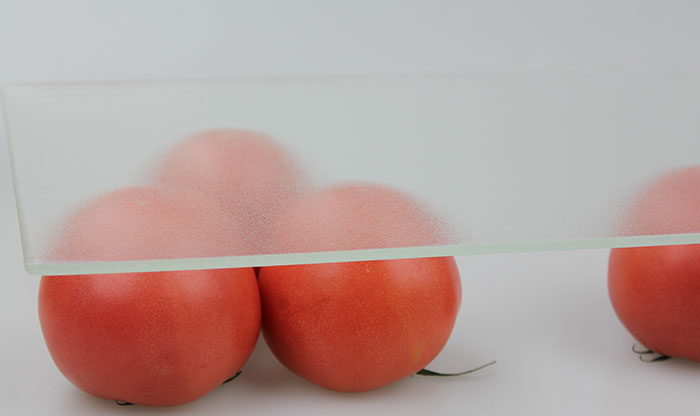
What Is Greenhouse Coated Glass?
It is not a film applied to the surface. It is a functional optical coating—just nanometers thick—deposited on the glass through advanced processes like vacuum magnetron sputtering or chemical vapor deposition.
Think of it as a precision spectral beam splitter—it transmits the visible light your crops need for photosynthesis at high efficiency, while reflecting or blocking the infrared radiation that carries heat.
In simpler terms: it puts sunglasses on your greenhouse—letting in only the light that matters.
Four Core Advantages That Redefine Greenhouse Cover Materials
1. Superior Light Transmittance
Standard greenhouse glass delivers 88%–90% visible light transmittance. Our coated glass pushes that figure to 97.5% or higher—with select products reaching 99.9%.
What does that mean in practice?
More sunlight reaches the crop canopy. As long as light intensity stays below the saturation point, higher transmittance directly drives higher yields. For blue-violet light—the most photosynthetically active band—our coated glass achieves over 99% transmittance.
2. Precision Heat Rejection
The core problem with conventional greenhouses in summer: nearly half of solar energy arrives in the form of infrared radiation, which converts directly into unwanted heat.
Our coated glass, through selective spectral control, cuts near-infrared transmittance to under 10%—blocking heat at the source, before it ever enters the greenhouse. The result? Internal temperatures up to 10–15°C lower than standard glass greenhouses.
And here is the best part—this cooling effect requires zero external energy. It is a passive thermal management solution built into the material itself. No operating cost. No moving parts. Just results.
3. Energy Savings That Cut Operating Costs
Thermal management works both ways with coated glass:
l Summer: blocks incoming infrared heat, reducing cooling demand;
l Winter: Low-E coating reflects internal heat back into the greenhouse, preventing energy loss.
With double-glazed tempered coated glass, the overall heat transfer coefficient (U-value) drops significantly—reducing both cooling and heating energy consumption by over 30% in climate-controlled greenhouses.
And what you save on energy goes straight to your bottom line.
4. Built to Last – One Investment, Years of Returns
Unlike plastic films that need replacing every year or two, coated glass is engineered for the long haul.
Our magnetron sputtering process delivers exceptional coating adhesion—withstanding over 8 years of UV exposure without fading or peeling. Etching-based coatings fuse with the glass substrate itself, eliminating delamination even in hot, humid greenhouse environments. Optical performance remains stable over the full service life.
Maintenance? Simple. A freshwater rinse restores full transmittance. Minimal upkeep. Maximum longevity.
Let Every Ray of Sunlight Work for Your Crops
With greenhouse coated glass, you are not just covering a structure—you are engineering an environment where light is optimized, heat is controlled, and every photon counts.
Ready to upgrade your greenhouse? Contact us today for a customized coated glass solution tailored to your needs.